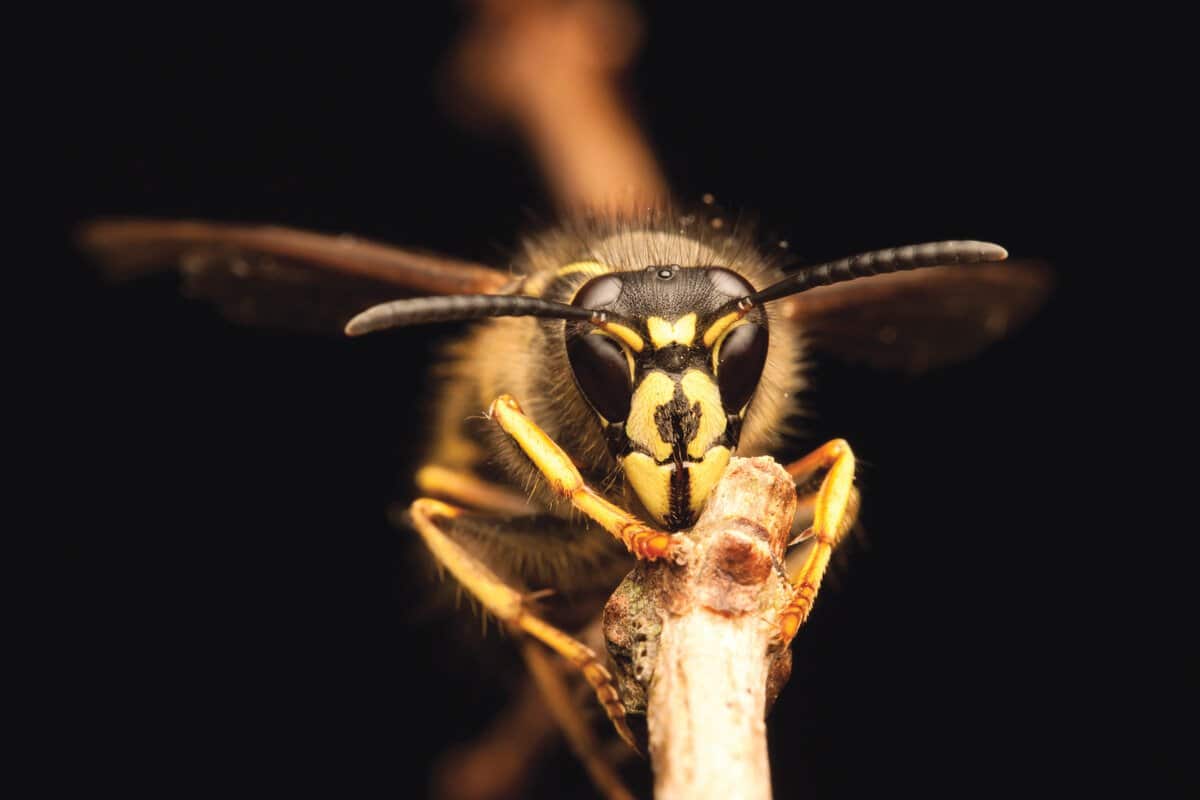
If you have spent any time outdoors in the Triad or Sandhills this September and felt like the yellowjackets are angrier than usual, you are not imagining things. Late summer is when yellowjacket colonies reach their annual population peak, food competition intensifies, and their defensive behavior becomes significantly more volatile than at any other point in the year. What felt manageable in June becomes genuinely dangerous by September, and homeowners who have coexisted with a nearby nest all summer often find out the hard way that September changes the equation entirely.
Effective yellowjacket control starts with understanding what drives that aggression and why the typical instinct to handle things independently often makes the situation worse. If you live in or near the Triad, you need to know about yellowjacket activity in September, how to identify them correctly, what triggers an attack, and when to call PMi for professional removal.
Why September Is the Most Dangerous Month for Yellowjackets
Yellowjackets are social insects that build colonies from scratch each spring. A single fertilized queen emerges from winter dormancy, establishes a small nest, and begins producing workers. Through spring and early summer, the colony grows steadily but remains relatively small. By August, that same colony has reached several hundred to several thousand workers, all protective of the nest and increasingly competitive for food.
September brings together two factors that make yellowjackets more dangerous than at any other point in their seasonal cycle. First, the colony is at maximum size, so any disturbance near the nest triggers a response from far more workers than in spring or early summer. Second, the behavioral shift that happens in late summer changes how aggressively yellowjackets pursue humans and food sources in the first place.
Homeowners who discovered a yellowjacket nest in May and decided to wait it out should understand that the colony they’re dealing with in September is fundamentally different in scale and temperament from the one they initially found. Yellowjacket control that felt optional earlier in the season has become considerably more urgent.
Understanding Yellowjackets: What Are You Actually Dealing With?
What Yellowjackets Look Like and How to Identify Them
Yellowjackets are slim, smooth-bodied insects with a distinct yellow-and-black banded pattern on the abdomen. Workers measure about 3/8 to 5/8 of an inch long. Unlike bees, they have no visible body hair, which gives them a sleeker, more polished appearance. Their flight is direct and purposeful, and they move noticeably faster than most bees when agitated.
One of the most reliable behavioral identifiers is how they respond to proximity. A yellowjacket that senses a threat near the nest will quickly orient toward it, often before the homeowner realizes how close they are to an entrance. That orientation response is a meaningful warning sign and one that should be taken seriously.
How Yellowjackets Nest and Why That Makes Them Dangerous
Yellowjackets build paper nests from chewed cellulose, and their preferred nesting locations are what make them particularly hazardous. Ground nests, established in abandoned rodent burrows or naturally occurring soil voids, are among the most dangerous because the entrance is often a small, easily overlooked hole in the lawn or mulch bed. A homeowner mowing over a ground nest or a child running through the yard can stumble onto an entrance without any warning and trigger an immediate defensive response from the colony below.
Wall voids, attic spaces, and structural cavities inside the home present a different but equally serious challenge. A colony nesting inside a wall void is entirely concealed, detectable only by a consistent pattern of insects entering and exiting through a gap in siding, a soffit, or a utility penetration. By September, a wall void nest that has been developing since spring may contain thousands of workers and a network of combs extending throughout a significant portion of the void space.
Not to Be Confused With
Several other stinging insects are often misidentified as yellowjackets, and the distinction matters for both safety and treatment.
Paper wasps are slimmer than yellowjackets, with longer legs that dangle visibly in flight, and they build the open, umbrella-shaped nests commonly found under eaves and deck railings. They are generally less aggressive than yellowjackets and typically sting only if the nest is directly disturbed.
Bald-faced hornets are black and white rather than yellow and black, and they build the large, enclosed tear-shaped paper nests that homeowners sometimes find in trees or attached to rooflines. They are extremely territorial and should never be approached or disturbed, but their appearance is distinctive enough that misidentification is less common than it is with paper wasps.
One easy way to distinguish paper wasps and bald-faced hornets from yellowjackets is that both create exposed nests; yellowjacket nests are always concealed in the ground or in voids. The stinging insect that is most likely to be confused with a yellowjacket is the European hornet. These wasps are significantly larger than yellowjackets, but like yellowjackets, they nest in voids. They may nest in wall voids, tree holes, or other protected areas, much like yellowjackets.
For a comprehensive guide to identifying all stinging insect species present in the Triad and Sandhills, PMi’s blog on stinging insects in North Carolina covers each species in detail, including which ones to leave alone and which require professional removal.
Why Yellowjacket Behavior Changes in Late Summer
The Colony Life Cycle and What It Means for September
To understand why September yellowjackets are so much more dangerous than their spring counterparts, it helps to understand how their colony develops across the season. A queen that emerged in March and founded a nest with a handful of workers in April has, by September, produced a colony that may contain anywhere from a few hundred to several thousand workers depending on conditions. Each of those workers defends the nest, and the sheer number available to respond to a perceived threat is what makes a late-summer encounter so much more serious than an early-season one.
Another biological factor comes into play in September. As the season progresses, the colony begins producing new queens and male drones whose purpose is reproduction, not foraging. This shift in colony demographics changes the nest dynamic and contributes to the increased wasp aggression homeowners experience in late summer.
The Food Competition Factor
Early in the season, yellowjackets primarily hunt protein. They feed on other insects and are actually somewhat beneficial in this role, hunting garden pests to provision their larvae. By late summer, the larval population in the nest declines as the colony shifts toward reproduction. Without larvae to feed, the workers lose their primary protein motivation and shift toward seeking out sugars to fuel their own activity.
This dietary shift is what makes September yellowjackets such a persistent nuisance at outdoor gatherings. Sweet beverages, ripe fruit, food residue on garbage containers, and even certain personal care products attract yellowjackets in late summer with an intensity that wasn’t present earlier in the season. A large colony, reduced food availability in the natural environment, and an aggressive pursuit of sugar sources create the conditions most homeowners associate with peak yellowjacket season.
What Triggers an Attack
Yellowjackets sting in response to perceived threats to the nest and, in some circumstances, to themselves when threatened individually. Triggers most likely to provoke a nest-defense response include vibration near the nest entrance, rapid movement near the colony, and alarm pheromones released by workers that have already stung. That last point is what makes yellowjacket encounters so dangerous: a single sting releases a chemical signal that recruits additional workers to the threat location, meaning the first sting is rarely the last.
Unlike honey bees, yellowjackets can sting repeatedly without dying. A single worker can deliver multiple stings in rapid succession. When dozens or hundreds of workers respond to an alarm signal at once, they can deliver a very high number of stings in a very short time. For individuals with known or unknown allergies to insect stings, this level of exposure carries serious medical risk.
Yellowjacket Control: Why DIY Removal Is a Serious Risk
The Hidden Nest Problem
The nesting habits that make yellowjackets so dangerous in an encounter also make them particularly difficult to address without professional equipment and training. A ground nest with a small, inconspicuous entrance may extend several feet underground, housing a large colony whose full scope is completely invisible from the surface. Approaching that entrance with a consumer product, even one marketed for yellowjacket control, puts the applicator in close proximity to potentially thousands of agitated workers, with no protective gear and no safe exit strategy.
Wall void nests add another complication: the entrance point visible on the exterior of the home may be far from where the actual nest is located within the void. Treating the entrance without addressing the nest accomplishes little and may seal workers inside the wall, creating pressure that drives them to find alternate exits, including into the home.
Why Over-the-Counter Products Fall Short
Consumer yellowjacket control sprays are designed to knock down individual insects and provide a short-term repellent effect at the point of application. They cannot penetrate deep enough into a ground nest or wall void to reach the queen and the core of the colony. A treatment that kills foraging workers without eliminating the queen and the colony structure leaves the infestation fundamentally intact. The nest will keep producing new workers to replace those lost, and the surviving colony will be more defensive than before the treatment.
Timing also matters considerably. Yellowjacket control applied at the wrong time of day, in the wrong weather conditions, or without accounting for the nest layout is far less effective than a treatment designed around the specific species and nesting situation.
The Real Consequences of a Failed DIY Attempt
A yellowjacket nest that survives a partial or unsuccessful removal attempt does not return to its previous level of defensiveness. Workers that have already responded to a perceived attack are primed to defend more aggressively, and the colony as a whole becomes more reactive after a disturbance. Homeowners who attempt DIY removal and retreat without completing the job often find themselves dealing with a more dangerous situation than the one they started with.
Yellowjacket treatments are dangerous for anyone, even trained professionals. Even people with no known allergies may end up in a life-threatening situation, since an allergy to yellowjacket venom can develop at any point in life and may not be discovered until significant exposure occurs.
Signs that a yellowjacket nest requires immediate professional attention:
- Consistent traffic of yellowjackets entering and exiting a gap in siding, a soffit, or a utility penetration
- A ground-level entrance in the lawn, mulch bed, or along a foundation with regular insect activity
- Audible buzzing inside a wall, ceiling, or attic space
- Multiple unexplained stings occurring near the same area of the yard
- Any nest located adjacent to a doorway, HVAC unit, children’s play area, or high-traffic outdoor space
- Any household member with a known allergy to insect stings
What to Do If You Find a Yellowjacket Nest on Your Property
Immediate Steps
The most important thing to do when you discover or suspect a yellowjacket nest is to stop approaching it. Mark the general location from a safe distance, keep children and pets away, and observe flight patterns from well outside the nest’s defensive perimeter to identify the entrance without getting close enough to trigger a response. Do not attempt to block or cover the entrance, as this will not eliminate the colony and will cause workers to seek alternate exits.
If the nest is in a location you can’t avoid, such as near a doorway or along a frequently used path, limit traffic in that area until you can arrange professional yellowjacket control, and clearly communicate the location to everyone in the household.
Situational Awareness for the Rest of the Season
While waiting for professional treatment, a few practical steps can meaningfully reduce yellowjacket attraction and encounter risk on the rest of the property:
- Keep all garbage containers tightly covered and away from outdoor seating and dining areas
- Clean up food and beverage residue from outdoor surfaces promptly after meals
- Avoid leaving sweet beverages in open containers when outside
- Keep ripe or fallen fruit cleaned up from the yard
- Avoid wearing strongly scented personal care products when spending time outdoors
- Wear closed-toe shoes when walking through the yard, particularly in areas where ground nests might be present
- Check outdoor seating, furniture gaps, and low vegetation before settling in, particularly in late summer when nesting activity is at its highest
PMi’s Approach to Yellowjacket Control in the Triad and Sandhills
Professional Identification First
Effective yellowjacket control begins with confirming that what you are dealing with is actually a yellowjacket colony rather than a paper wasp nest, a bald-faced hornet colony, or another species that requires a different treatment approach. PMi’s field specialists conduct a thorough assessment before making any treatment decision, identifying the species involved, locating the nest, and evaluating the scope of the infestation. That information shapes a treatment plan built around the specific situation, not a generic response.
Safe, Targeted Removal
Professional yellowjacket control involves more than applying a product. Treatment timing, application method, the protective equipment the technician wears, and the approach used for ground nests versus structural nests all affect whether removal is successful and safe. PMi’s field specialists are equipped and trained specifically for these situations, with the tools and experience to access and treat nests in locations that would be genuinely dangerous to approach without professional preparation.
For wall void and structural nests, this includes identifying the full extent of the colony within the void before treatment, ensuring that the application reaches the core of the colony rather than just the entrance point. For ground nests, it means treating at the right time and in the right conditions to maximize penetration and minimize the defensive response during the process.
Long-Term Prevention Recommendations
After removal, PMi provides property-specific yellowjacket control recommendations to reduce the likelihood of yellowjackets nesting in the same or nearby locations in future seasons. This includes identifying and sealing structural entry points that allow access to wall voids, assessing conditions around the property that may attract nesting queens in spring, and guidance on habitat modifications that reduce yellowjacket pressure across the property over time.
For a deeper look at the full range of stinging insects present in the Triad and Sandhills, what each species looks like, and which ones require professional removal versus which can be left alone, PMi’s stinging insect blog provides a comprehensive species-by-species guide built around the specific insects homeowners in this region are most likely to encounter.
PMi serves homeowners throughout the surrounding Piedmont Triad and Sandhills communities.
If you find a yellowjacket nest on your property or see signs of one, don’t wait until the situation escalates. Contact PMi today for a professional assessment and let our field specialists handle yellowjacket control safely and effectively.
Triad: 336-272-4400 Sandhills: 910-215-9700
Learn more about PMi’s residential pest control services here.